
At the Last Address

I have three homes: Rome, my birthplace and central home, where I have spent most of my life and keep my studio; the Netherlands, in a historic suburb outside The Hague, a practical part-time base while our children study here; and a home-of-my-hope, Lucca, where those who know me well are entirely fed up with my stubborn, multi-year insistence that soon I will buy a charming apartment within the splendid historic walls, and that too will become home.
This morning, in deep, drenching rain, I picked the first flower from the huge camellia plant in my garden in the Netherlands. It is the only burst of color right now, as winter will linger here for many gray months.
As I admired it, I wondered how long this plant had been in the garden. Was it already here between 1940 and 1945? Camellias live a long time in this climate and, in protected spaces, can thrive for more than a century. Was it here when, on my street and the streets around it, beginning in July 1942, German nazi authorities — assisted by Dutch police — rounded up and expelled at least 234 of my Jewish neighbors from their homes?
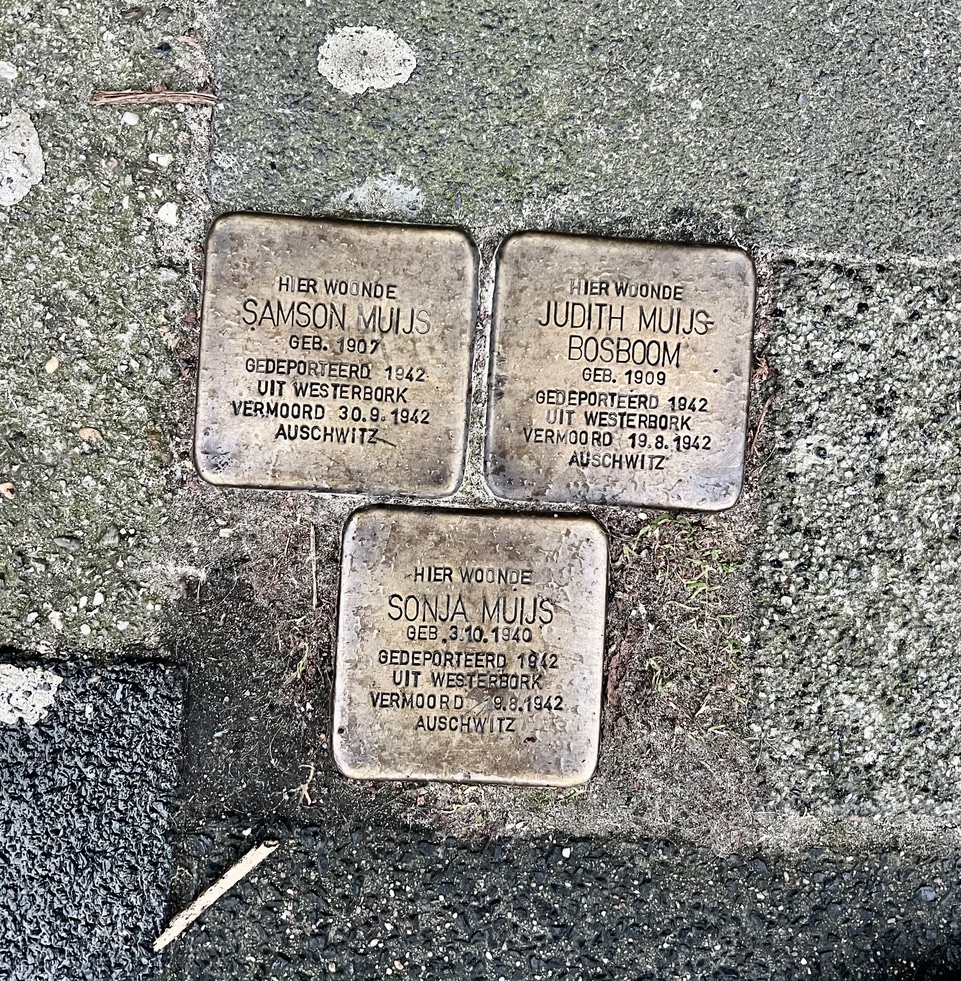
 All were transported by train, eventually arriving at extermination camps such as Auschwitz and Sobibor, where they were murdered or died from the conditions imposed on them. Jews were not the only people targeted by the nazis, but racial laws focused first and foremost on Jews, who were annihilated based on nazi definitions of Jewish identity, not nationality or citizenship. Roma and Sinti, political prisoners, members of the Resistance, Jehovah’s Witnesses, gay people, and those accused of hiding Jews or resisting German orders were also at risk of death. But the door-to-door annihilation was almost exclusively Jewish. Of the approximately 140,000 Jews living in the Netherlands in 1940, about 102,000 were deported, and fewer than 35,000 survived. Most of those forced to leave never returned to the homes they left, carrying — because they were told to — a single suitcase.
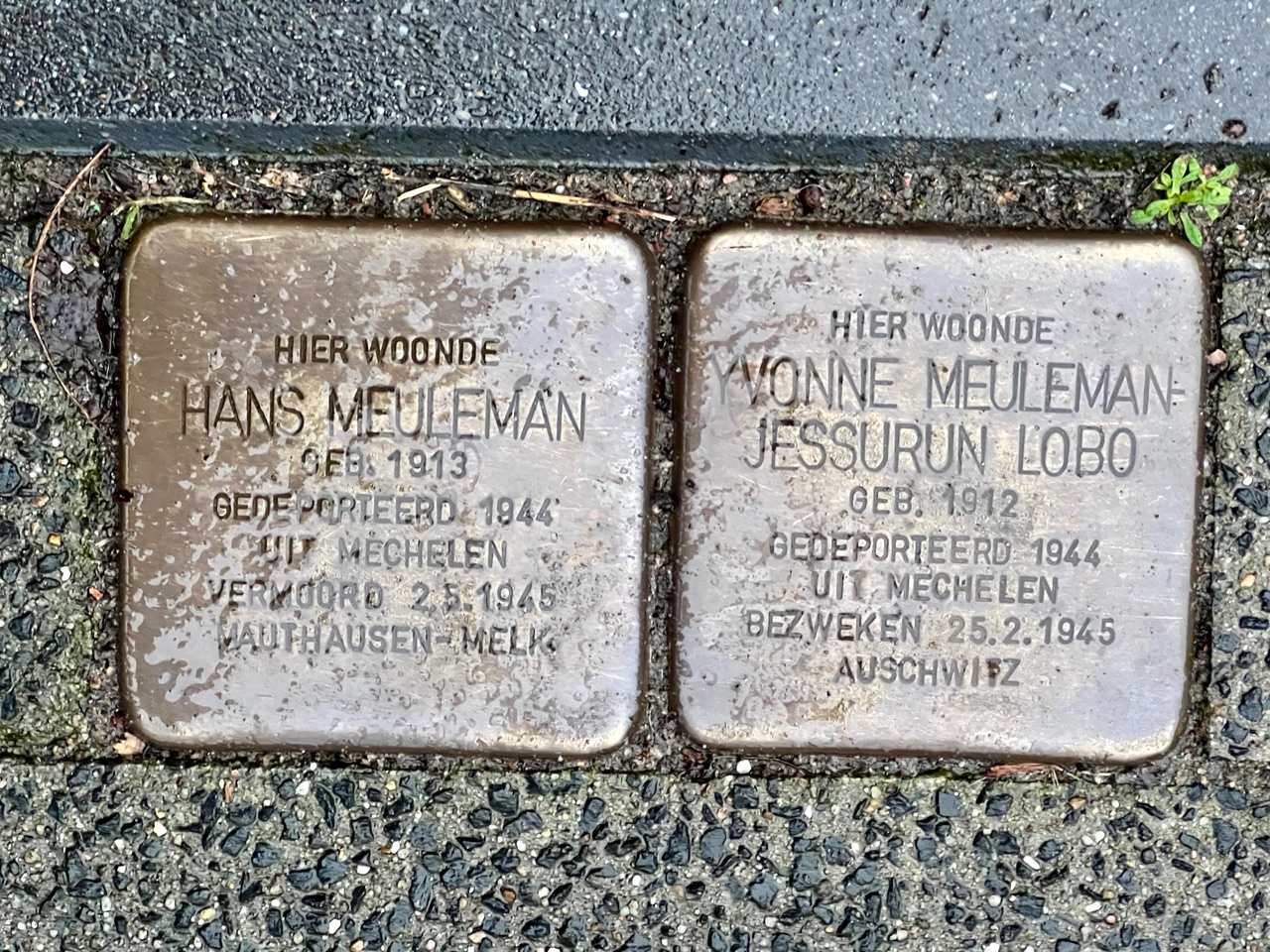
The Holocaust murdered six million people, all of whom were expelled from their homes.
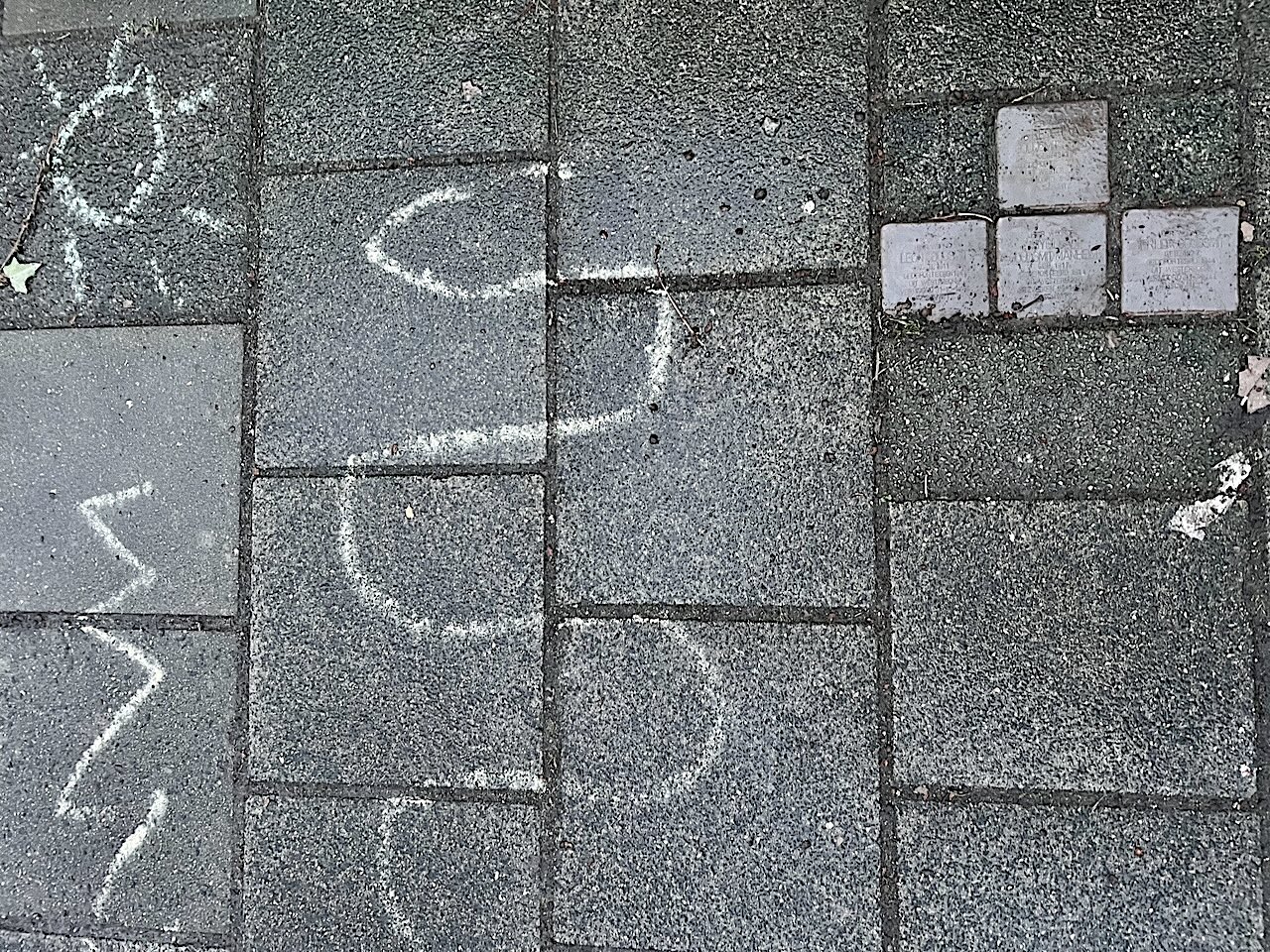
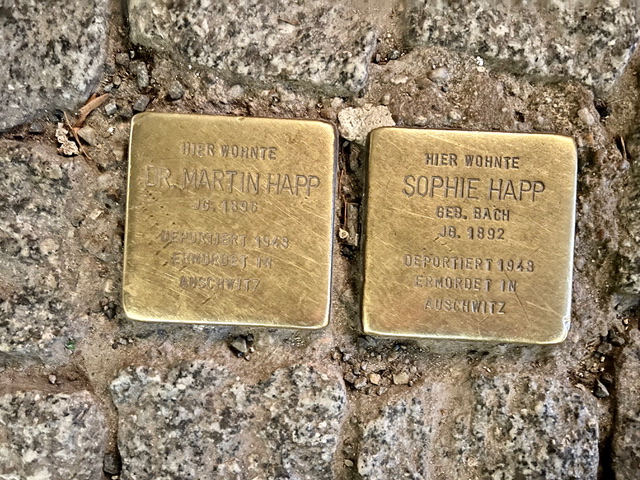
Since the 1990s, victims have been commemorated across Europe with Stolpersteine. These “stumbling stones” are small brass plaques set into sidewalks, marking the last freely chosen homes of people deported and murdered under nazi persecution, returning individual names and lives to the streets from which they were erased.
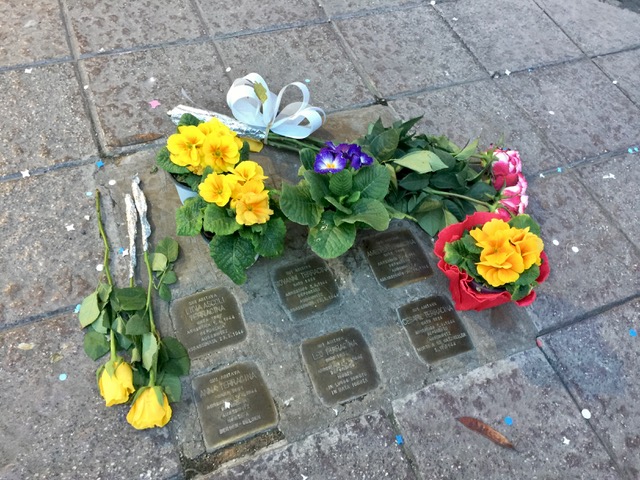
Last August, my family and I were preparing to move from a tiny city-center apartment in the Hague into a nearby house. We found one that, after an extensive tour of its large, charming rooms and garden, seemed just right. Standing outside in the bright August sun, arranging a contract with the affable agent, I noticed four brass cobblestones at my feet. Four Stolpersteine for the Van Mentz family: Maurits and Hilde, aged 35 and 34, and their sons, Benedictus and Robert, 10 and 11. Although the family had gone into hiding, they were found. Hilde and the children were killed at Auschwitz three days after being expelled from their home; Maurits died eleven months later.
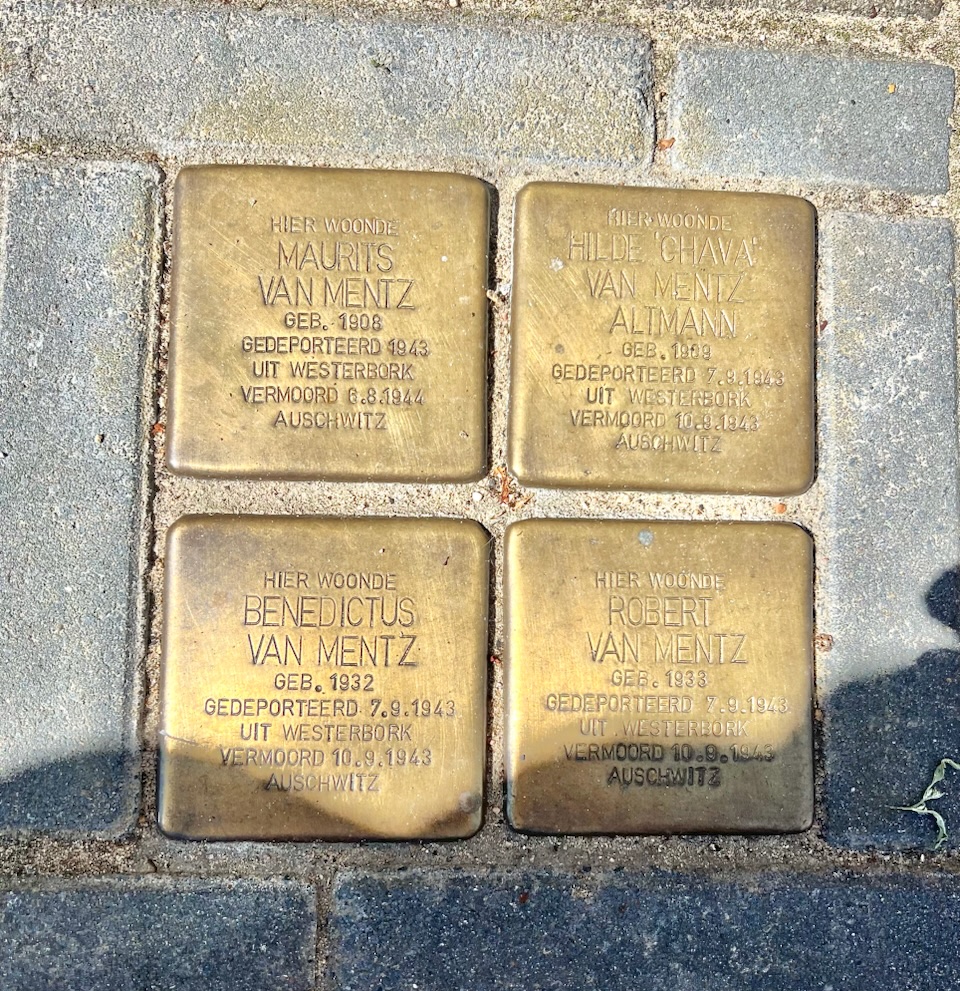
My husband, who is Jewish, immediately said he would want to create a shrine inside the house for the Van Mentz family, to keep alive the memory of the brief time they lived there : from at least April 1942 until April 1943, when they passed through that door for the last time.
As I stood over those four stones, shining in the sun, the weight of what had happened there — the lives erased, the brutality carried out on an ordinary bourgeois street — was unbearable. I knew I could not live in that house. The sadness was too immediate, too immense, too inescapable. The agent understood. She told me she lived just outside The Hague, in a suburb she thought I might like. That is how we came to live, when we are not in Italy, in a 1919 Art Nouveau semi-detached house called Emma, with a huge camellia in its garden.
Brutality is the language of authoritarianism. In the twentieth century, paramilitary groups enforced state power in fascist regimes; they continue to do so in the present century, terrorizing entire communities.
Agents of the law act with impunity, protected by immunity.
Ordinary people, not corporations or institutions, sustain resistance. Highly visible, peaceful mass protest and sustained political engagement are the tools available.
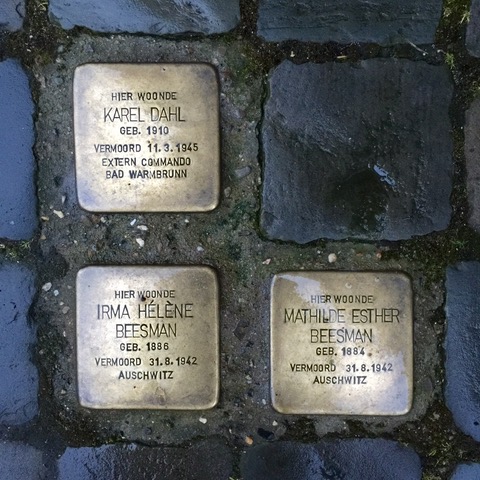
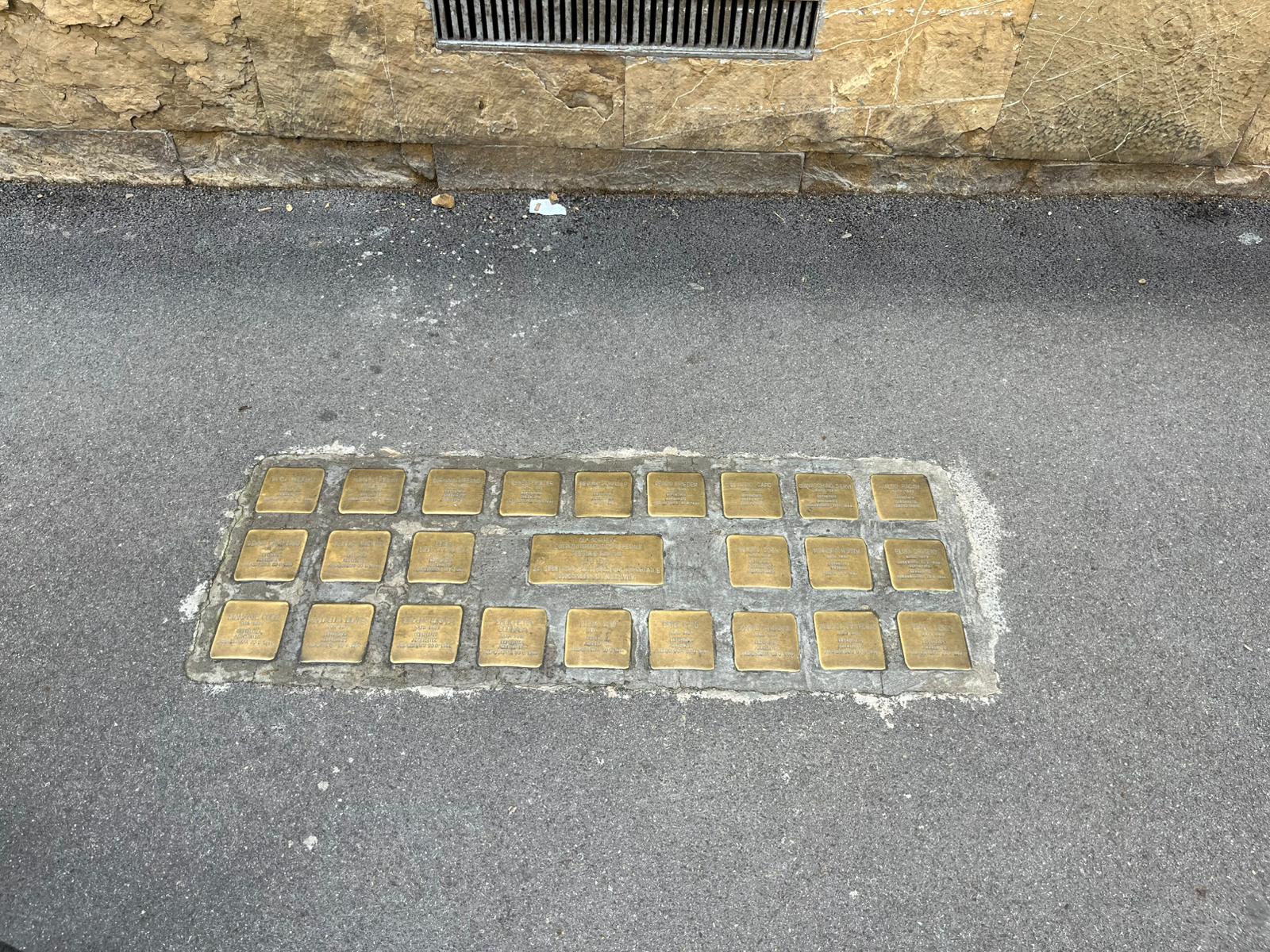
Today, more than 116,000 Stolpersteine in 31 European countries remain in place, marking the last freely chosen homes of those who were deported and murdered.
Today marks the 81st anniversary of the liberation of Auschwitz-Birkenau.

Meet Marjorie
Insider’s Italy is an experienced family business that draws on my family’s four generations of life in Italy. I personally plan your travels. It is my great joy to share with you my family’s hundred-year-plus archive of Italian delights, discoveries and special friends.