
Scenes from a Neapolitan Presepio
There are many things I collect — Parmesan knives, earrings decorated with fruits, vegetables or flowers, and Italian-made silk scarves. But nothing gives me more pleasure than the presepio, and one of the reasons is that my grandparents began collecting presepio figures in Rome in the 1920s, and I have simply continued what they began.
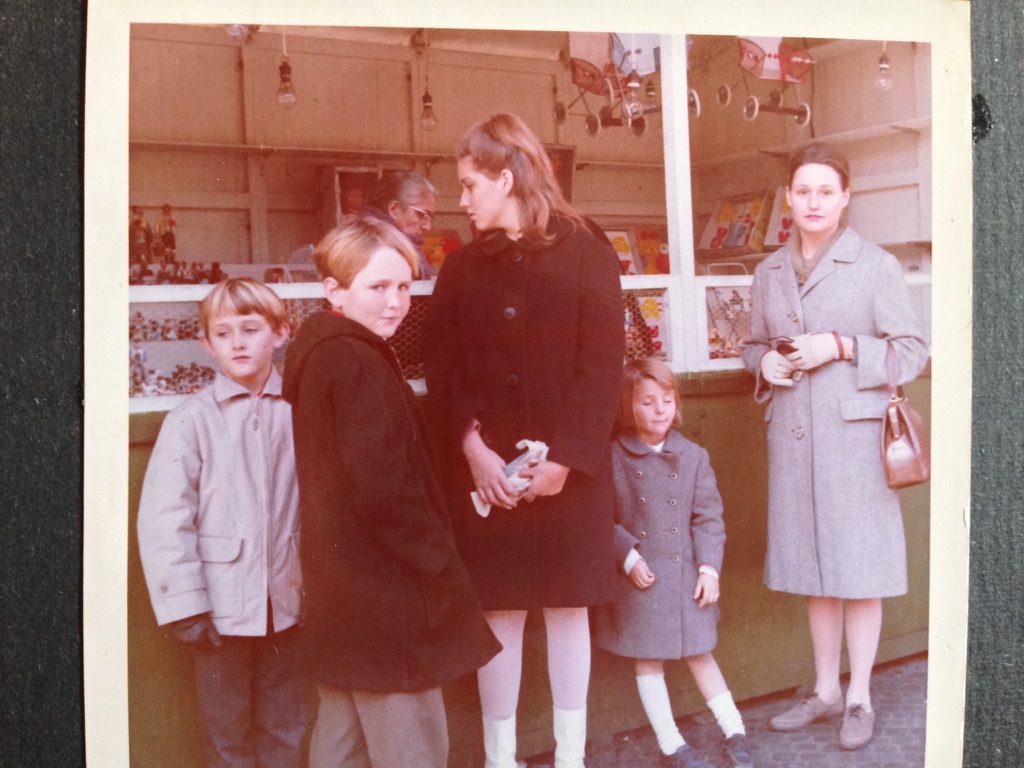
The presepio, or Christmas crèche, has been a significant Italian tradition since the 18th century when it developed and flourished in Naples. A presepio scene incorporates the Holy Family, kings, and angels, but more interestingly, it includes all the participants in local life: Neapolitan people who crowd the scene of the Nativity, almost suffocating it with a profusion of life, color, and vignettes.
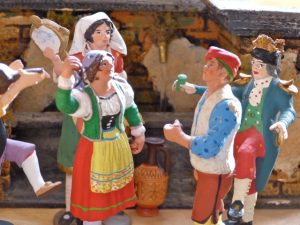
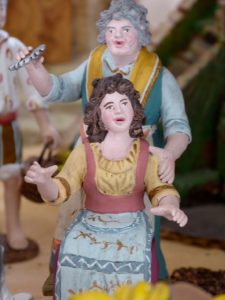
It reflects poverty and nobility, comic figures and drama, animals local and exotic : a riot of life that contrasts with the stillness of the Nativity itself. Some families and churches focus solely on the Holy Family; others throw themselves into creating vast, detailed installations that incorporate the entire town, blending biblical narrative with Neapolitan history and daily life.
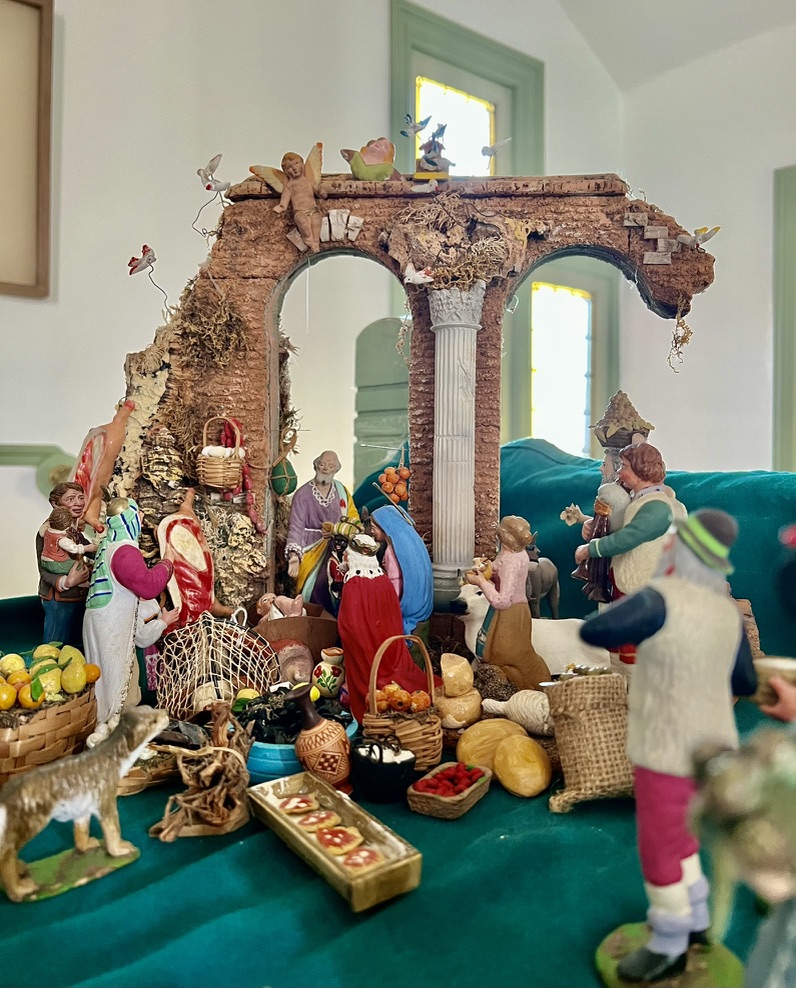
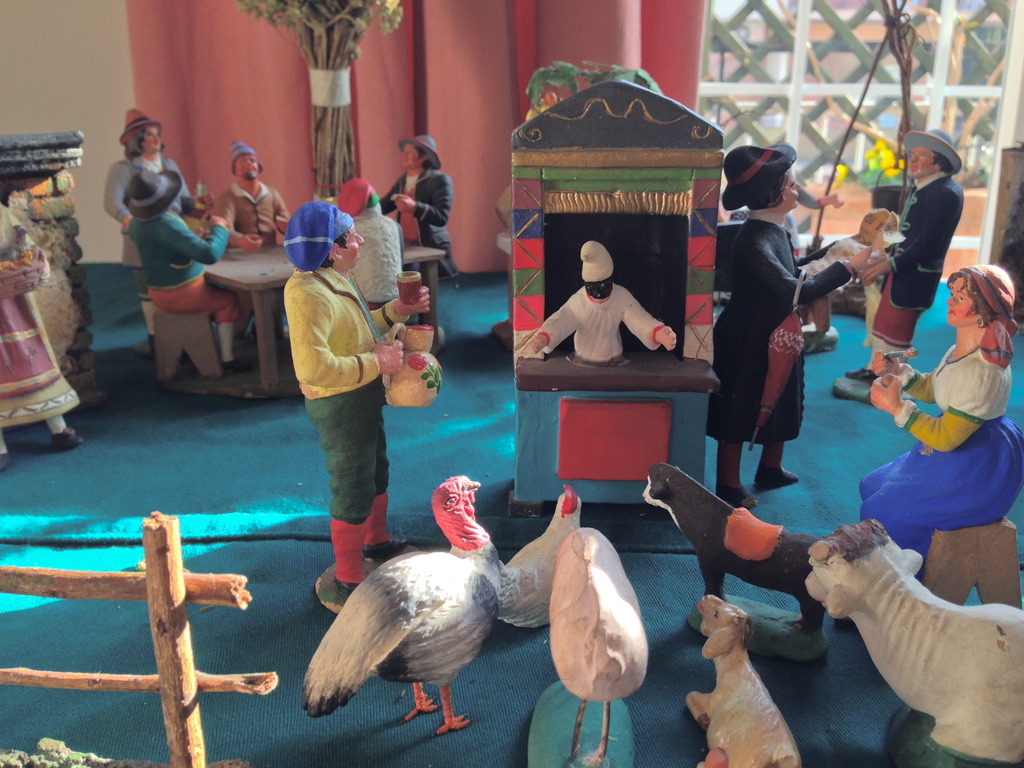
Our presepio, made up of 12-centimeter (just under five-inch) terracotta Neapolitan figures, is very much the latter.
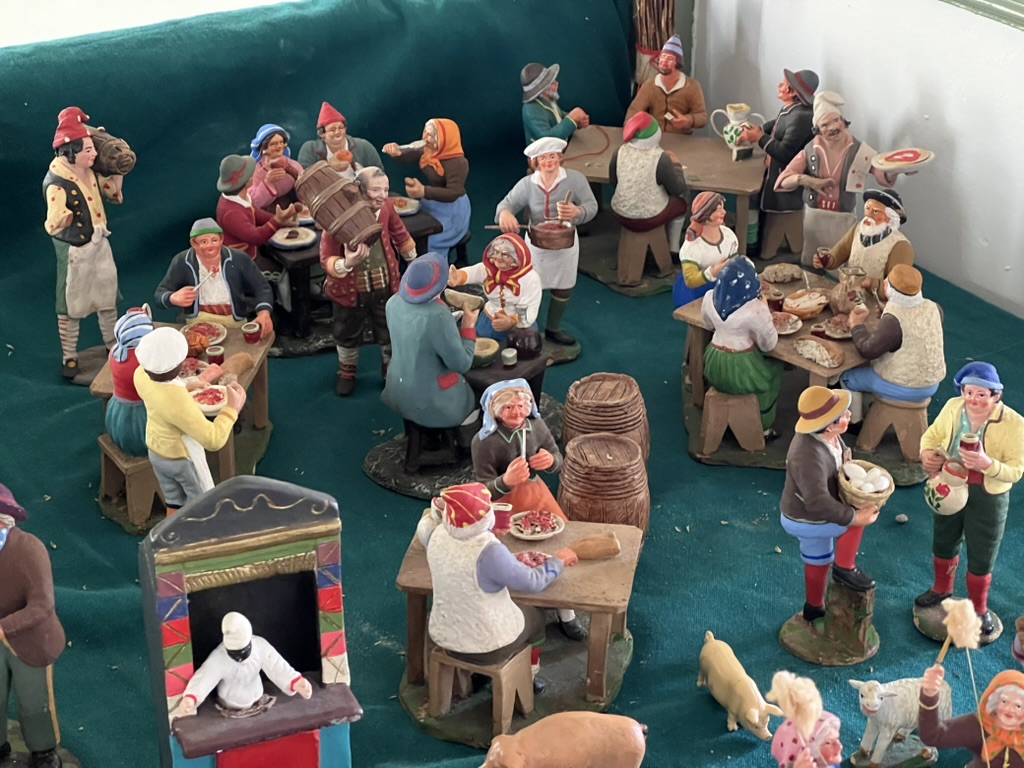
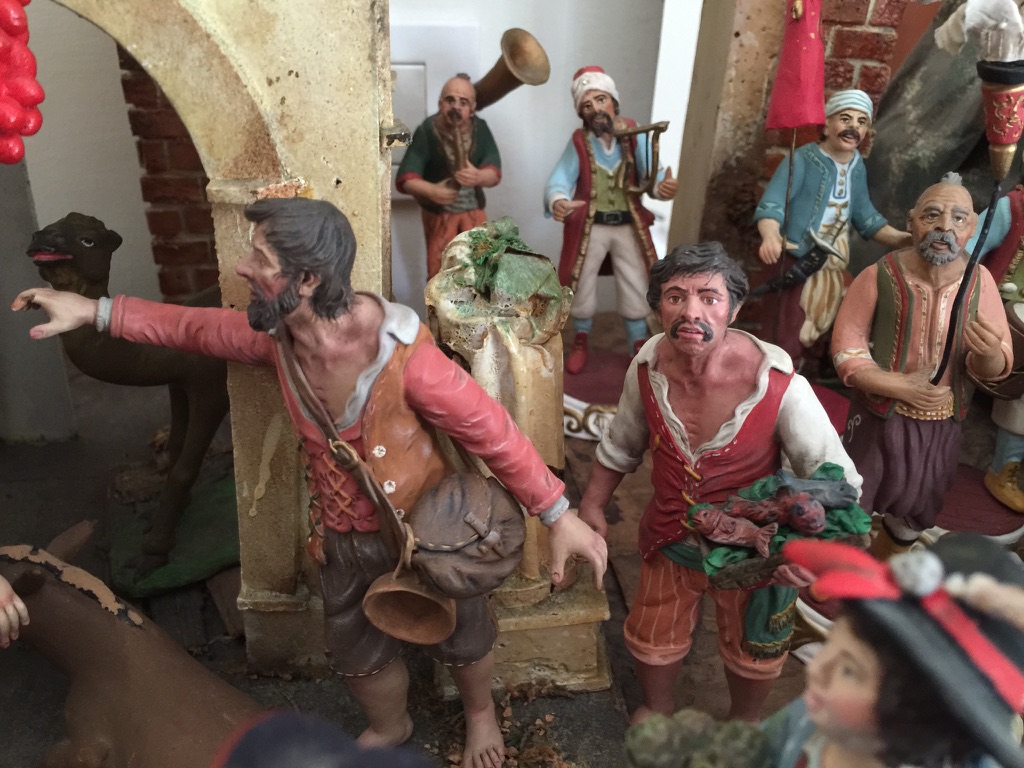
By tradition in Italy, Candlemas (La Candelora), celebrated today, is the day when churches and households begin to put away the presepio. Neapolitans, in particular, say that waiting any longer is considered very bad luck. But this year, at last, my figures will not be packed away like Chinese soldiers — standing upright for a year, tightly mummified in bathroom tissue and paper towels, with swaddled delicate fingers and tiny toes, wings and hooves, cabbages and fish. Instead, the entire cacophonous party will be moved into an enormous glass cabinet with seven shelves, where I can admire them all year round. This makes me deeply happy, since before, every year when the presepio was put away, a little piece of me disappeared into the boxes along with it.
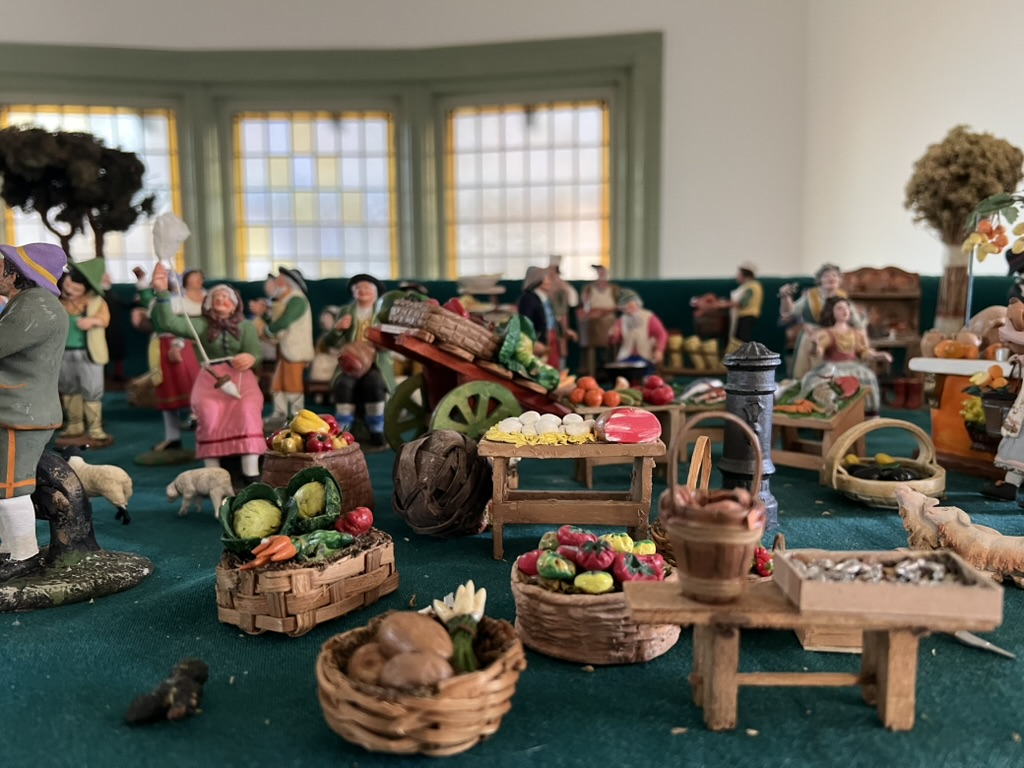
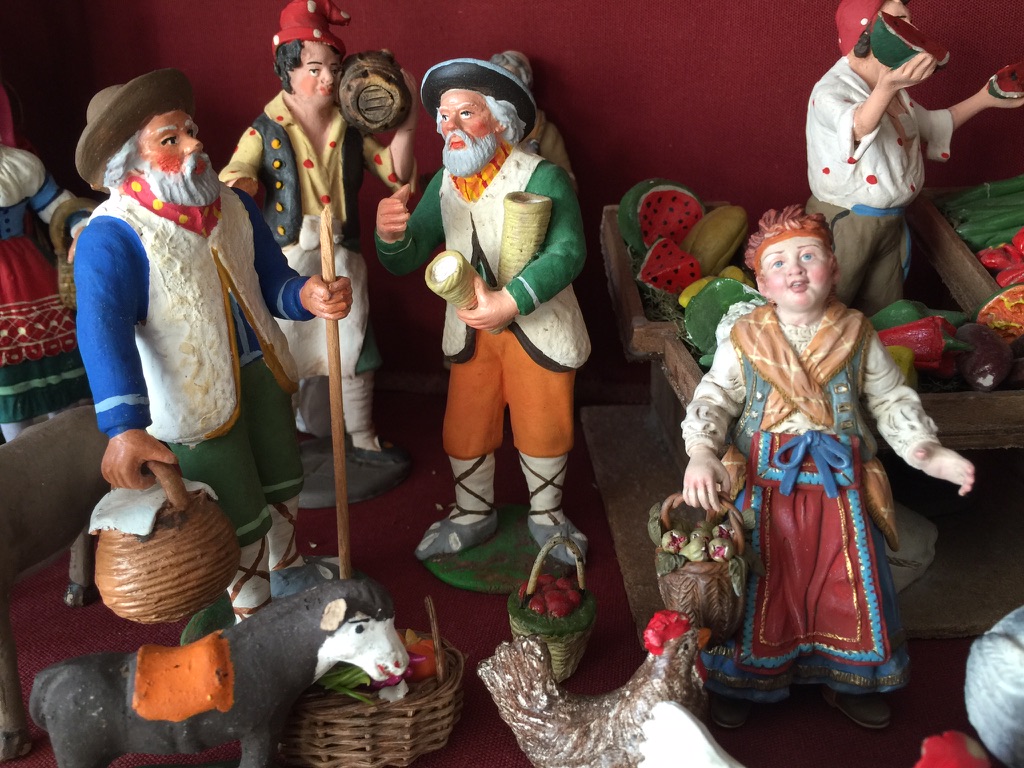
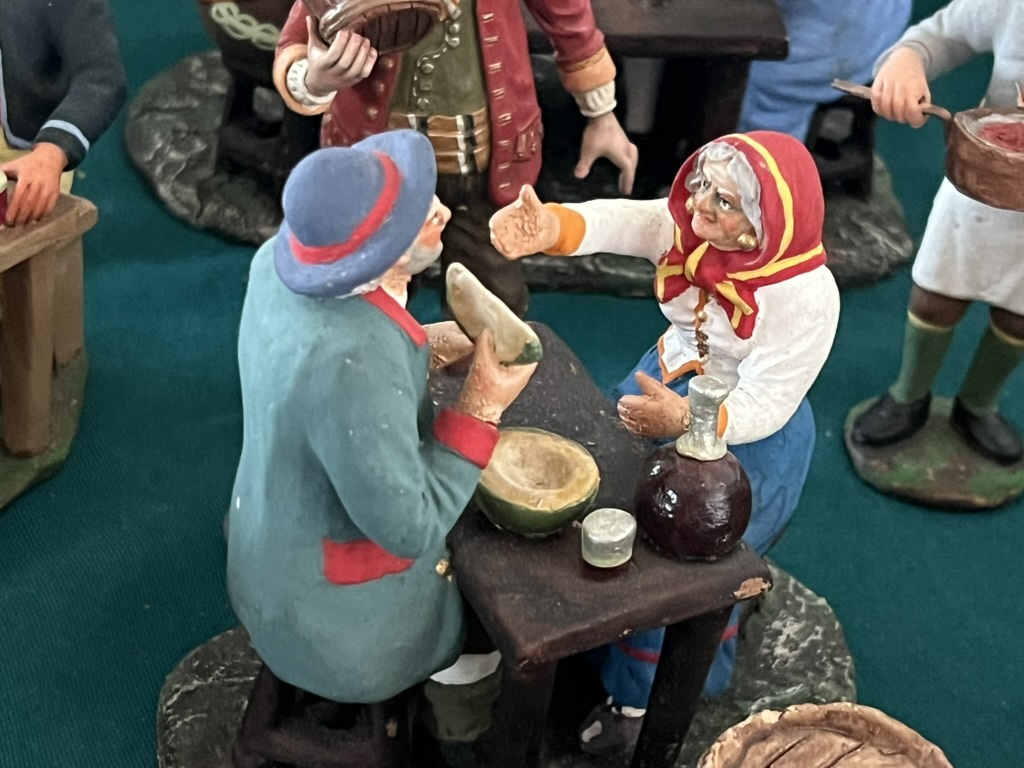
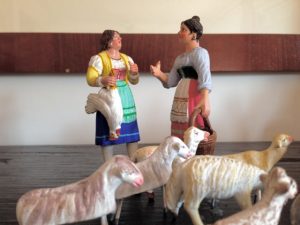
Some years, when I set the figures out, I recreate scenarios I have been inventing since I was first old enough to help organize the presepio. The favorite woman with the green blouse and blue skirt, carrying the ricotta, always speaks to the lady with the polka-dotted head scarf. When I place them down together, they simply resume the conversation they have been having for decades — certainly not as if a year has passed.
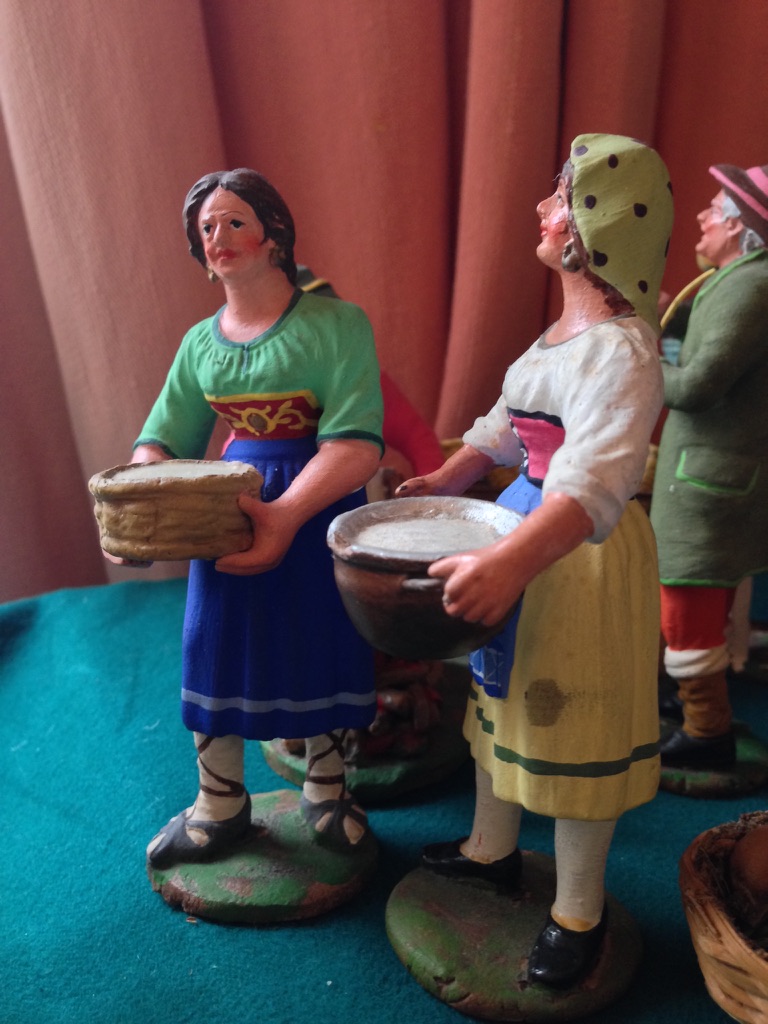
They talk about food, and they complain about how heavy the ricotta is. The puppet theater presents the same show every year: the same Pulcinella (Punch and Judy) I first saw on Rome’s Janiculum Hill when I was three..
…now playing in a happy, continuous rerun in our presepio, year after year after year.
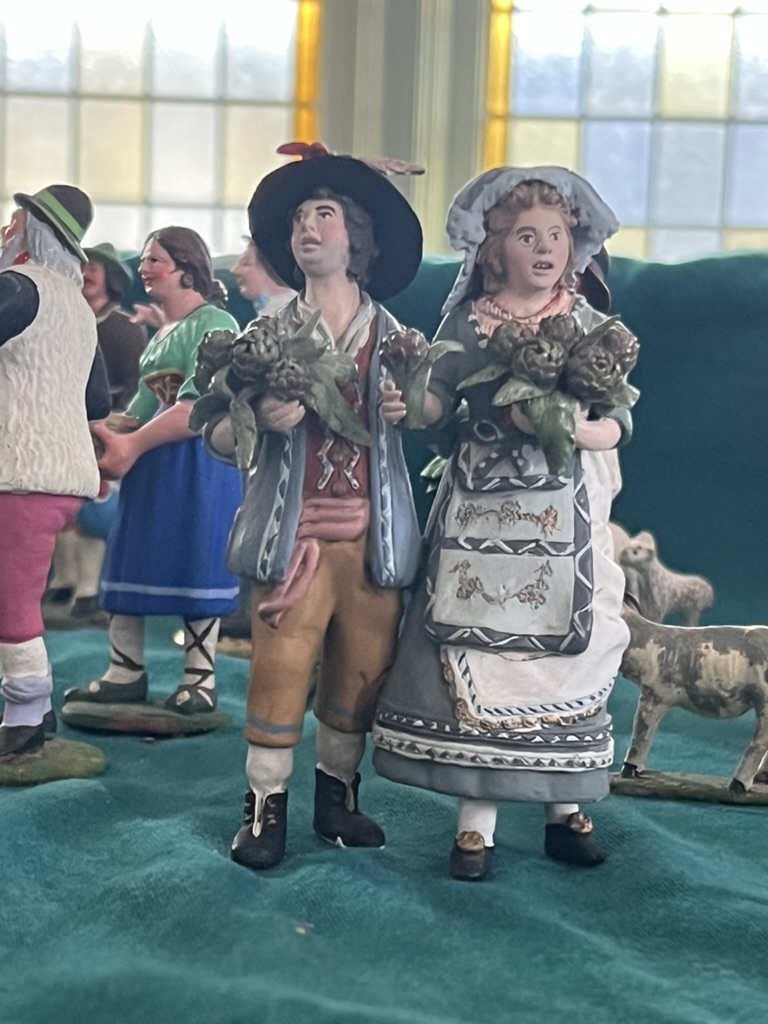
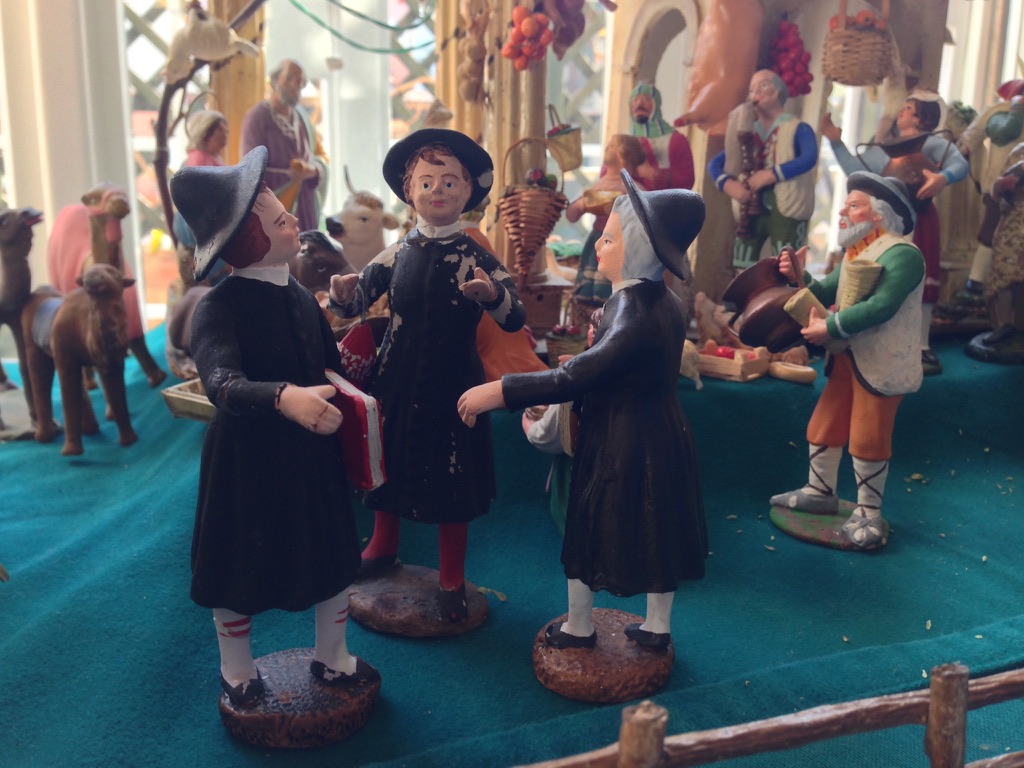
I miniature myself. I am one of the priests with a red umbrella or a red Bible, speaking with two other priests under their red umbrellas about the weather.
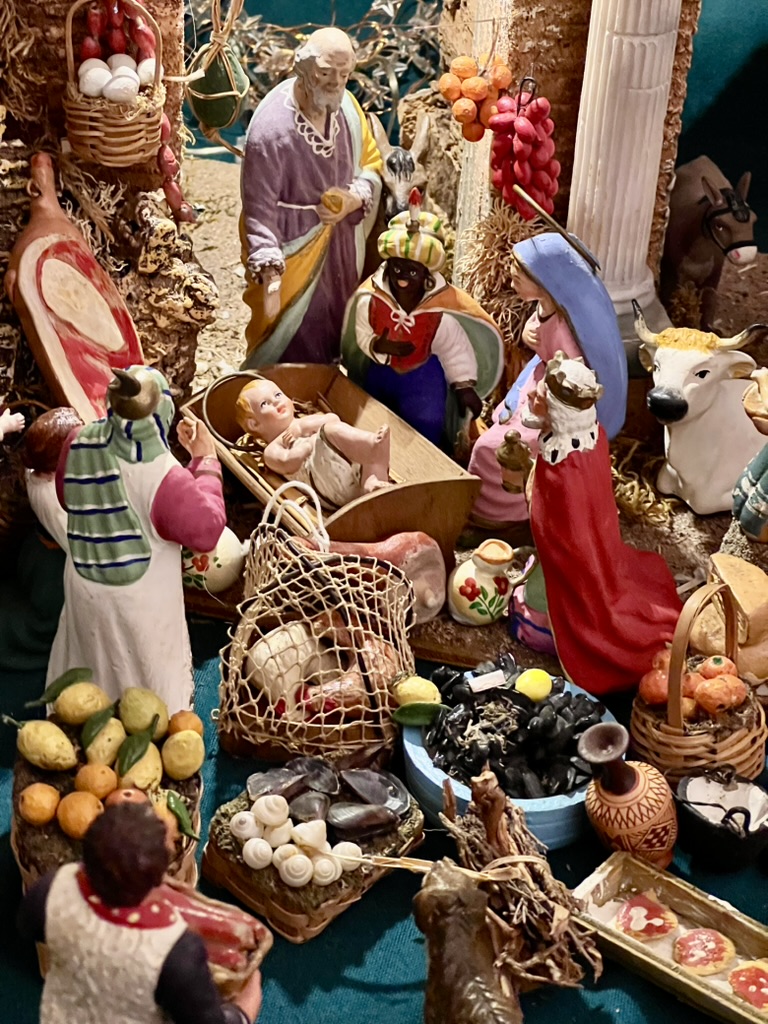
I am the old woman carrying pigeons; the tiny mussels on the blue platter are just the right size for me to buy. I might take them to Jesus, or I might not. I might spend the day talking with my familiar friends in the market and carefully avoid the butcher, whom I have never liked (he cheated me once, in 1971). I arrange a tiny carcass of beef among the pile of presents at Jesus’ feet, and this gives me the same pleasurable shiver of disgust I suspect I felt when I was first allowed to help with the presepio and arrange the gifts.
Around the baby’s crib is a mound of offerings — pizza, oranges, fish, wine, garlic, tomatoes — everything a Neapolitan would think to bring as a heartfelt gift.
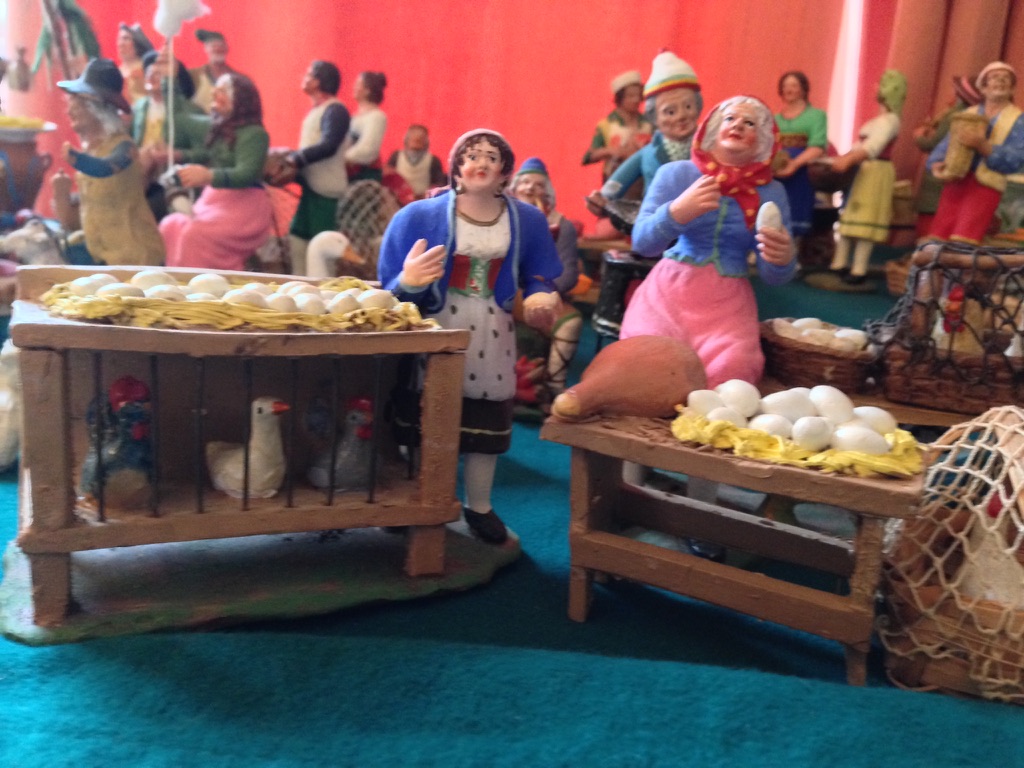
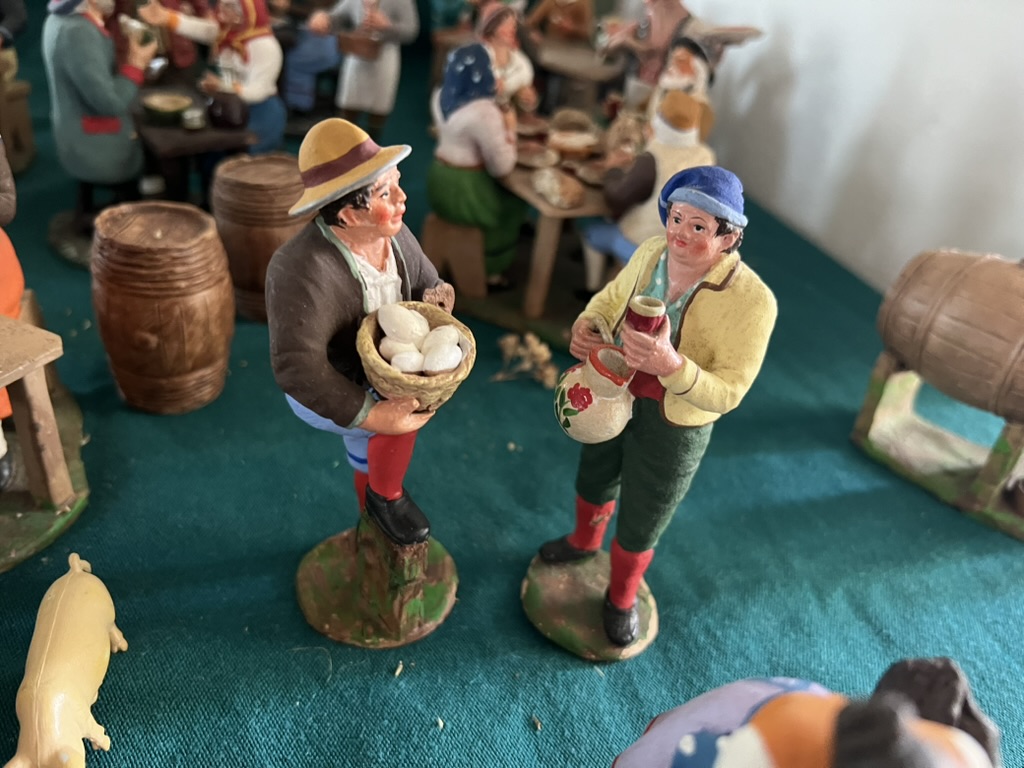
A few years ago, from a much-loved aunt, I inherited more presepio figures, collected in Rome by my uncle when I was a little girl. Sixteen new people entered the scene. It was particularly pleasing to have two egg sellers, each holding up a small, perfect egg in delicate fingers, hoping a passerby will buy it.
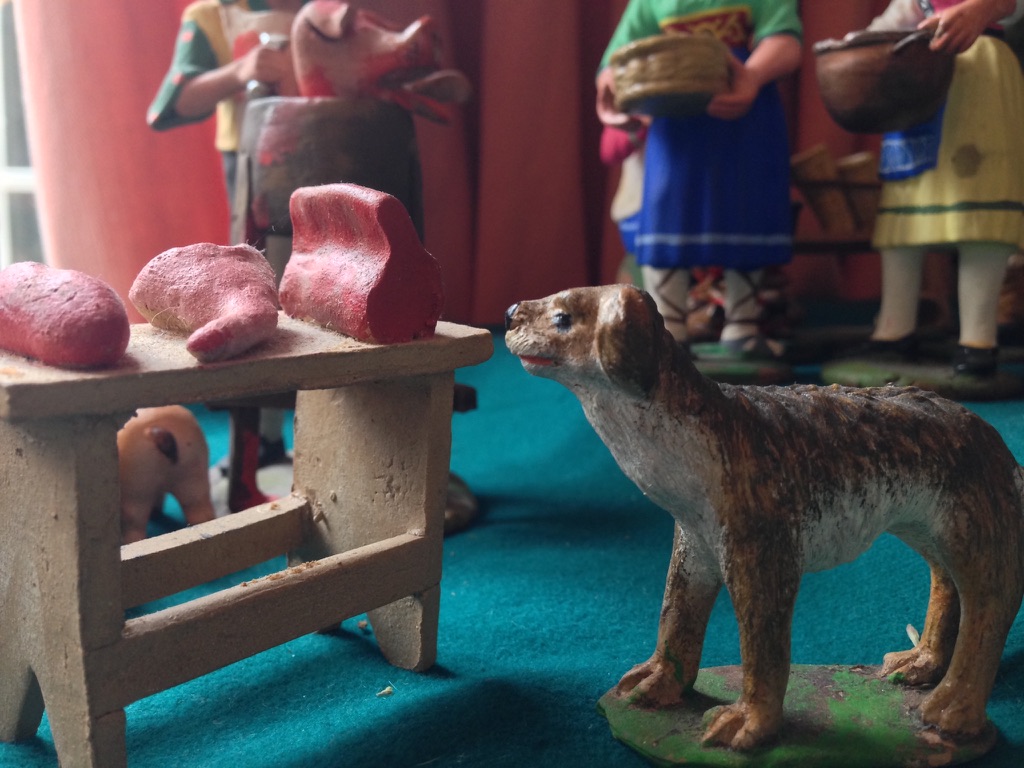
There was also a dog, a woolly rustic one, whom I always place among the meats.
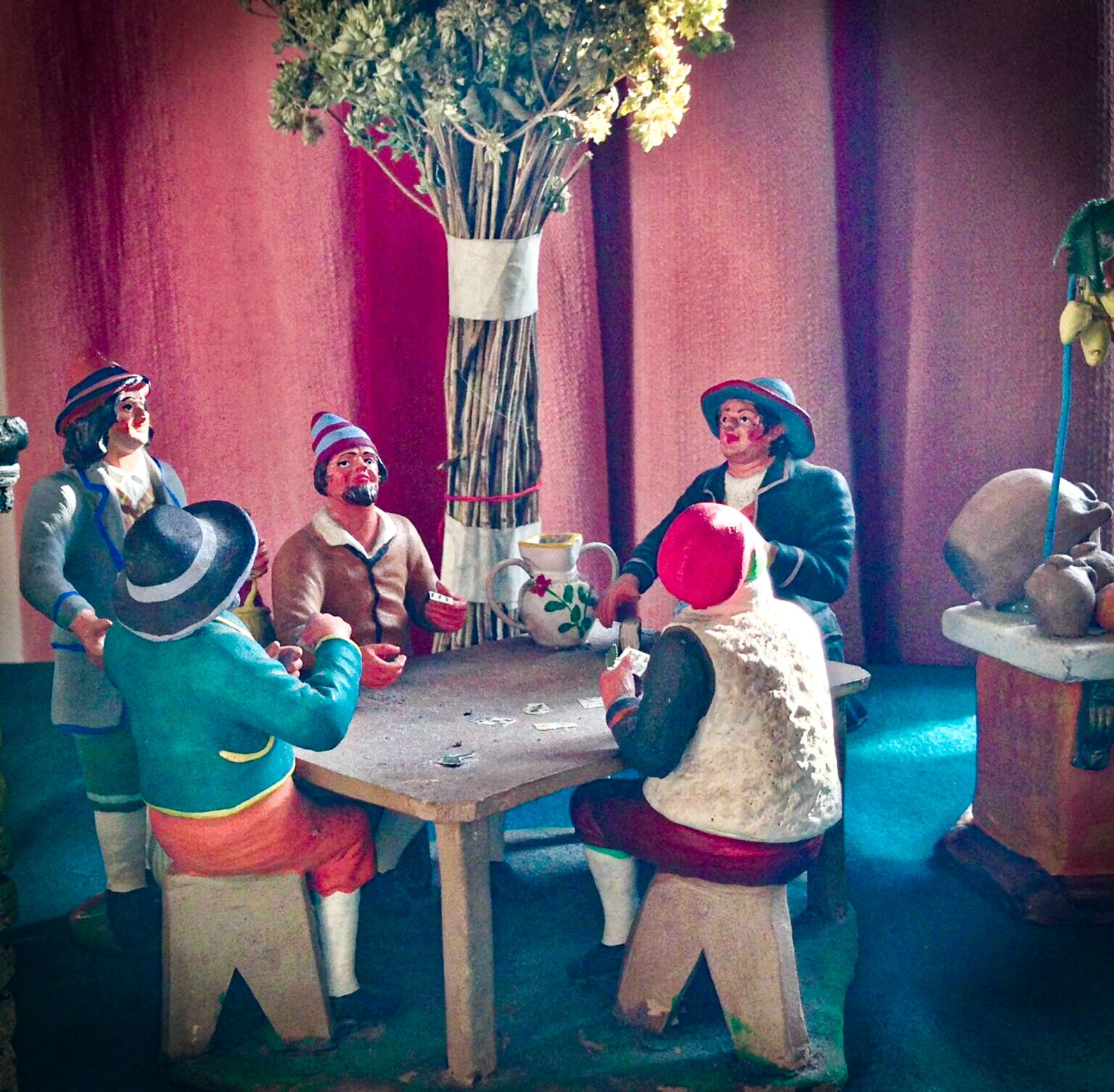
And four more merry-makers now sit in the osteria, playing cards and helping themselves to the tiny carafe of red wine, adding to the general conviviality.
Some of the cardinal figures — Jesus, Mary, and Joseph — are allowed out only every second year, as they have doubles: those from my mother’s childhood in the 1920s and ’30s, and those from my own, in the ’60s and ’70s. Some years we include four kings — two older ones, two from the 1960s.
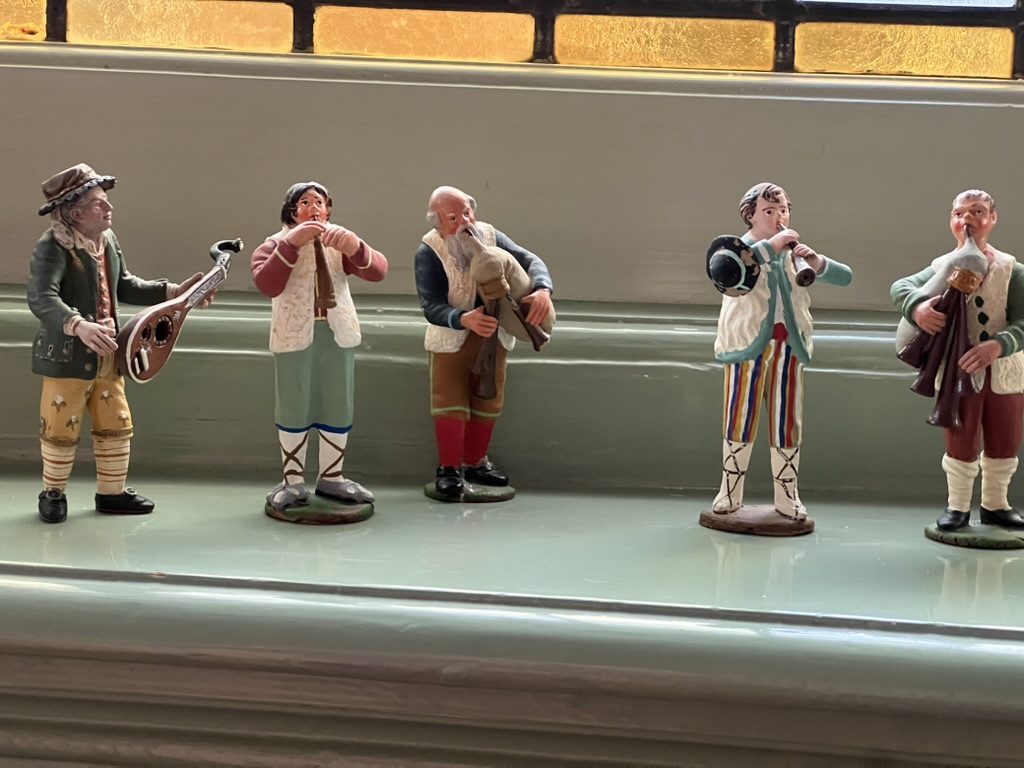
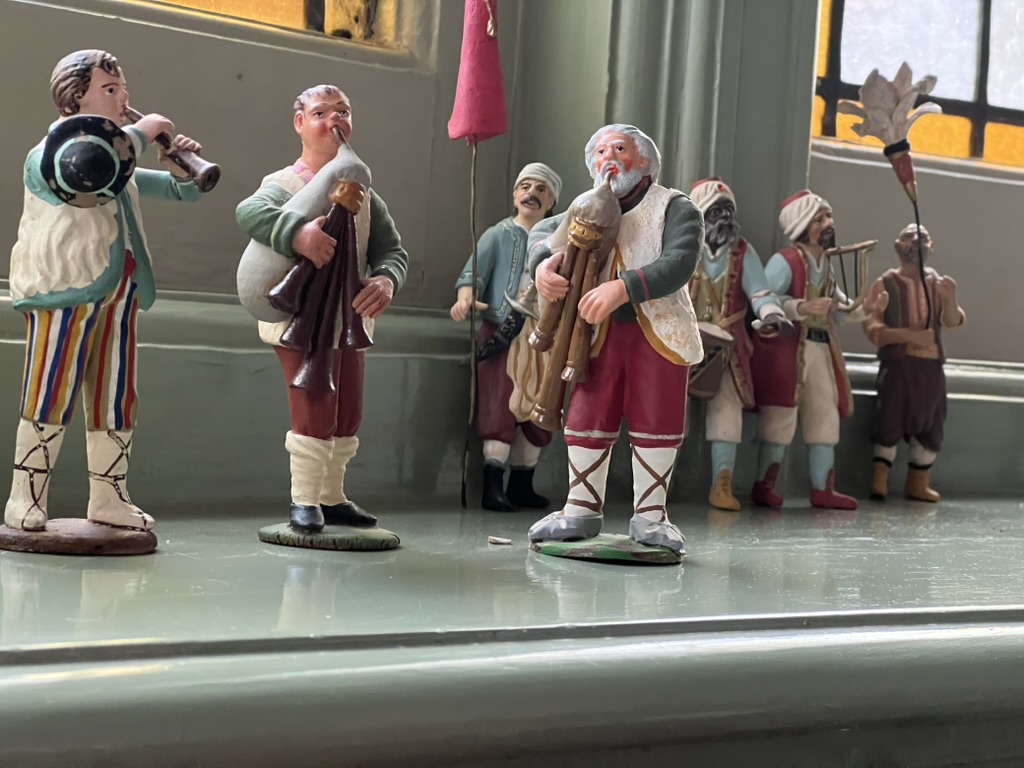
The musicians, like the angels, are a mixture of old and new.
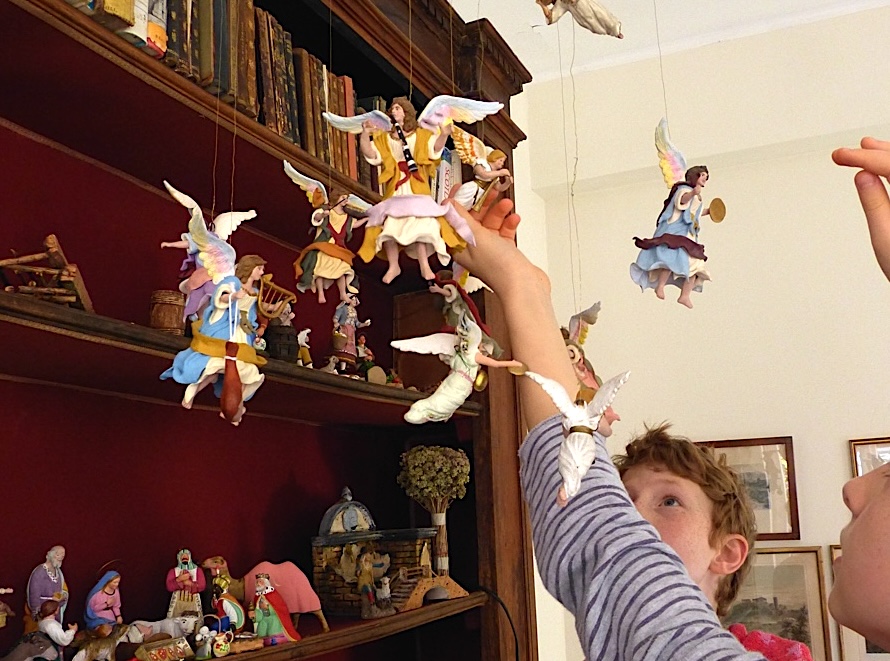
When my other beloved aunt used to visit, and my children were small, it filled my heart with a sweet, comforting sense of continuity to watch her with my son and daughter, puttering among the market figures, intent on arranging a scene she too had been playing in her head for eighty years. She had her own similar Neapolitan presepio.
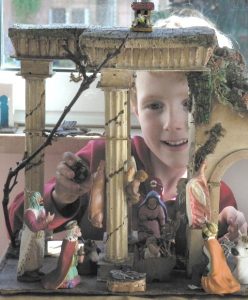
“You really need to enter into it and think what would be realistic,” she would say, as she unwrapped a tiny hammer from ancient tissue paper and placed it in the hands of the coppersmith. Then she would move him a little farther from the cobbler. “Too much noise to have them working so closely together.”
There is not much I love more than the presepio. In its extraordinary artisanship, its celebration of markets, family, food, and social life, it encompasses many of the Italian qualities I hold most dear. I think about it throughout the year, considering possible changes for the next Christmas, and I keep an eye out for the odd tiny object — one never knows where such things may appear — that might make a perfect addition.
What will next year bring to the ongoing magical world of the presepio? www.insidersitaly.com
Meet Marjorie
Insider’s Italy is an experienced family business that draws on my family’s four generations of life in Italy. I personally plan your travels. It is my great joy to share with you my family’s hundred-year-plus archive of Italian delights, discoveries and special friends.