
Insider’s Italy: A Fresco, a Peach, and the Art of Looking Closely
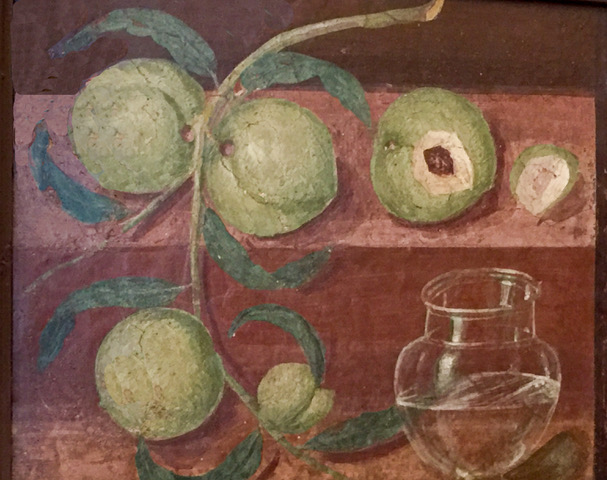
There is no single perfect fresco, but if there were one that most touches me at this moment, it is this.
Still Life with Peaches and Water Jar captures a moment of perfect impermanence — yet through the artist’s vision and technical brilliance, it is rendered permanent. Peaches, arranged across two shelves, have just been picked — note the curling fresh leaves and taut stems — and are not yet ripe. One has been bitten into, revealing a kernel far from ready to fall from its fruit. In the foreground, a clear glass jar filled with water showcases the artist’s ability to portray not one but two forms of transparency: water and glass.
The fresco comes from Herculaneum’s House of the Stags (Casa dei Cervi) and is now displayed at the National Archaeological Museum of Naples. It dates from between 45 and 79 AD.
Still Life with Peaches and Water Jar disappeared from view when Herculaneum — a once-wealthy, seaside town on the Bay of Naples just north of Pompeii — was destroyed by the eruption of nearby Vesuvius on August 24, 79 AD. Among Herculaneum’s most elegant residences was the House of the Stags, named for two stag sculptures found in its columned courtyard. The villa was strategically positioned to enjoy sweeping views of the sea, reflecting the wealth and refined taste of its owner, likely the merchant Q. Granius Verus.
Still Life with Peaches and Water Jar is one of a decorative series of ten or more still-life paintings, each roughly square in format. They were arranged in a row, sharing decorative borders, and placed in a highly visible part of the home where guests could admire them. These works depict a feast of fruits, crustaceans, fish, fowl, meats, vegetables, and drinking vessels which the painter portrayed on shelves, steps, or wall niches.
If you’ve been to the Naples Archaeological Museum as an Insider’s Italy client, you have seen Still Life with Peaches and Water Jar. Not one of our clients ever misses it. Our Naples/Pompeii/Herculaneum guide, Sabrina, always brings our travelers here.
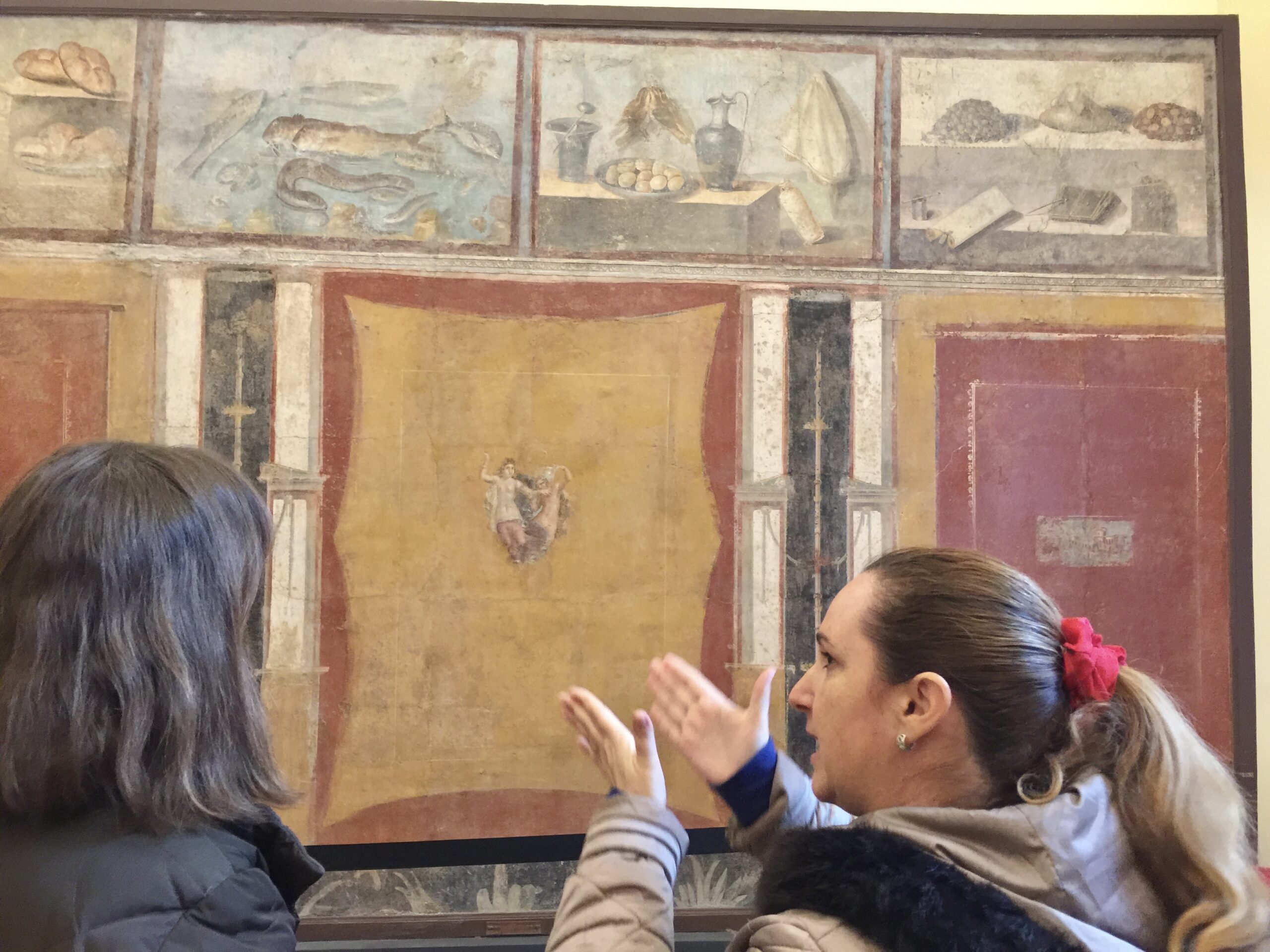
Those Insider’s Italy travelers who explore the museum on their own find it specially noted in their Travel Plans, this alongside other personal favorites.
The Naples Archaeological Museum receives around half a million visitors each year. But how many pause to examine Still Life with Peaches and Water Jar?
Our travelers often ask about the peach. When did it arrive in Italy? The peach is believed to have originated in China, where it was cultivated for millennia before spreading westward. Although the fruit was already present in the eastern Mediterranean, its arrival in Italy is generally dated to the late 1st century BC or early 1st century AD. Which means that the five peaches depicted here were still relative novelties — and that presenting such delicacies as part of a home’s decoration was a subtle yet pointed reflection of the owner’s sophistication and wealth.
Forty-five kilometers from Herculaneum lives my dear friend Giocondo. While restoring his family’s ancestral home, Centena, and clearing long-abandoned land, he discovered a single surviving heirloom peach tree — a variety that has all but vanished from the region.
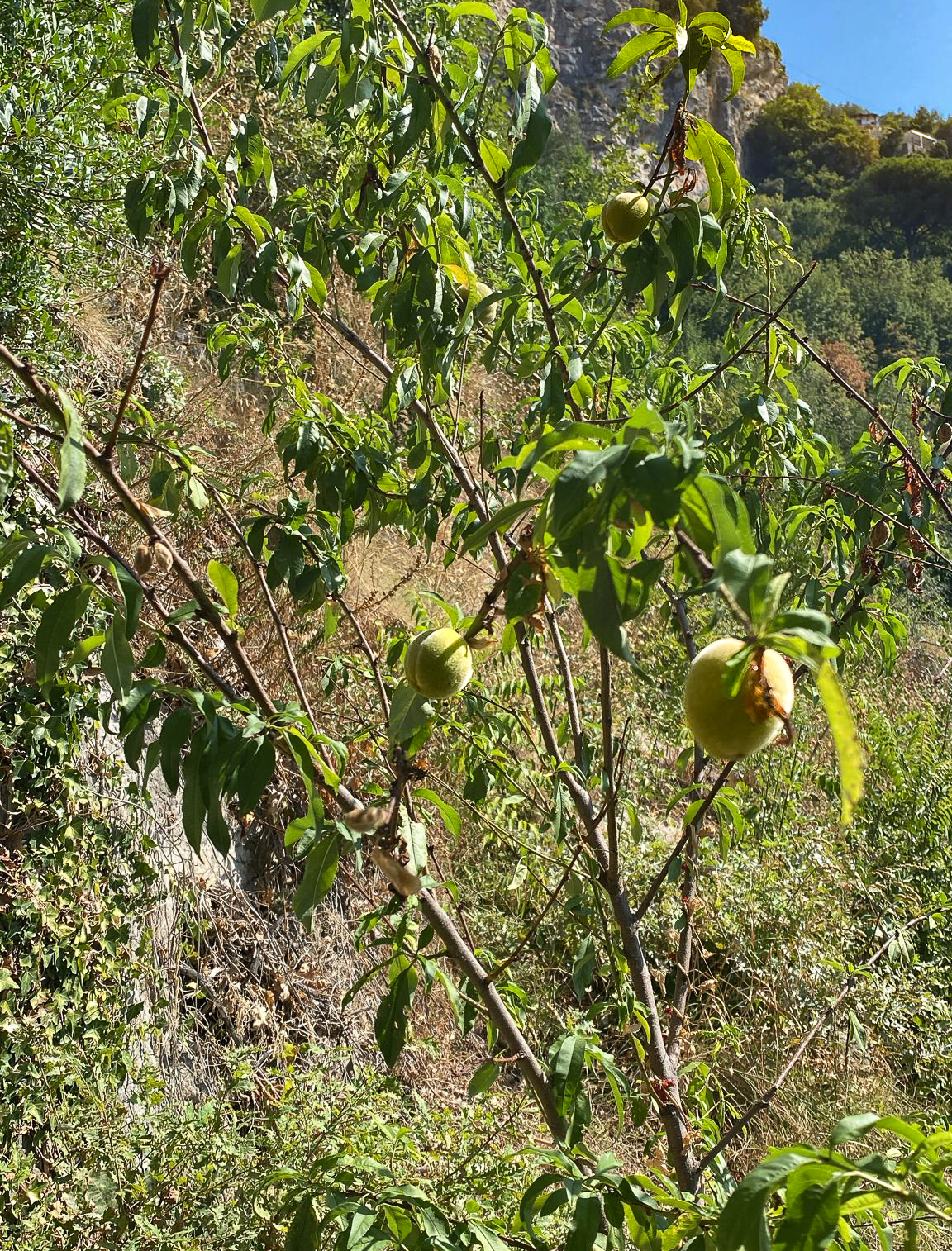
“It was one of many ancient variety fruit trees that flourished when there was equilibrium in the environment, and plenty of natural manure from our cows, sheep, chickens, and rabbits. The soil was very fertile, wild plants flourished everywhere; all it took was a seed and the fruit would follow. This last surviving peach tree has no scientific varietal name : we named it for its color or characteristics. Very, very tasty.”
Giocondo found the tree because he believed it was still there, buried beneath 40 years of untended grapevines and agricultural overgrowth. He remembered the trees from his youth, looked intently, and after considerable effort, was rewarded. He believes it is a spaccatela, and will nurse it back to health with natural manure and seasonal watering. He expects within the year to once again enjoy — and share — the unforgettable perfume and flavor of the peaches of his childhood.
At Insider’s Italy, we plan travel for those who, like Giocondo — or those who pause for a Roman peach — know that the richest rewards come to those who look closely.
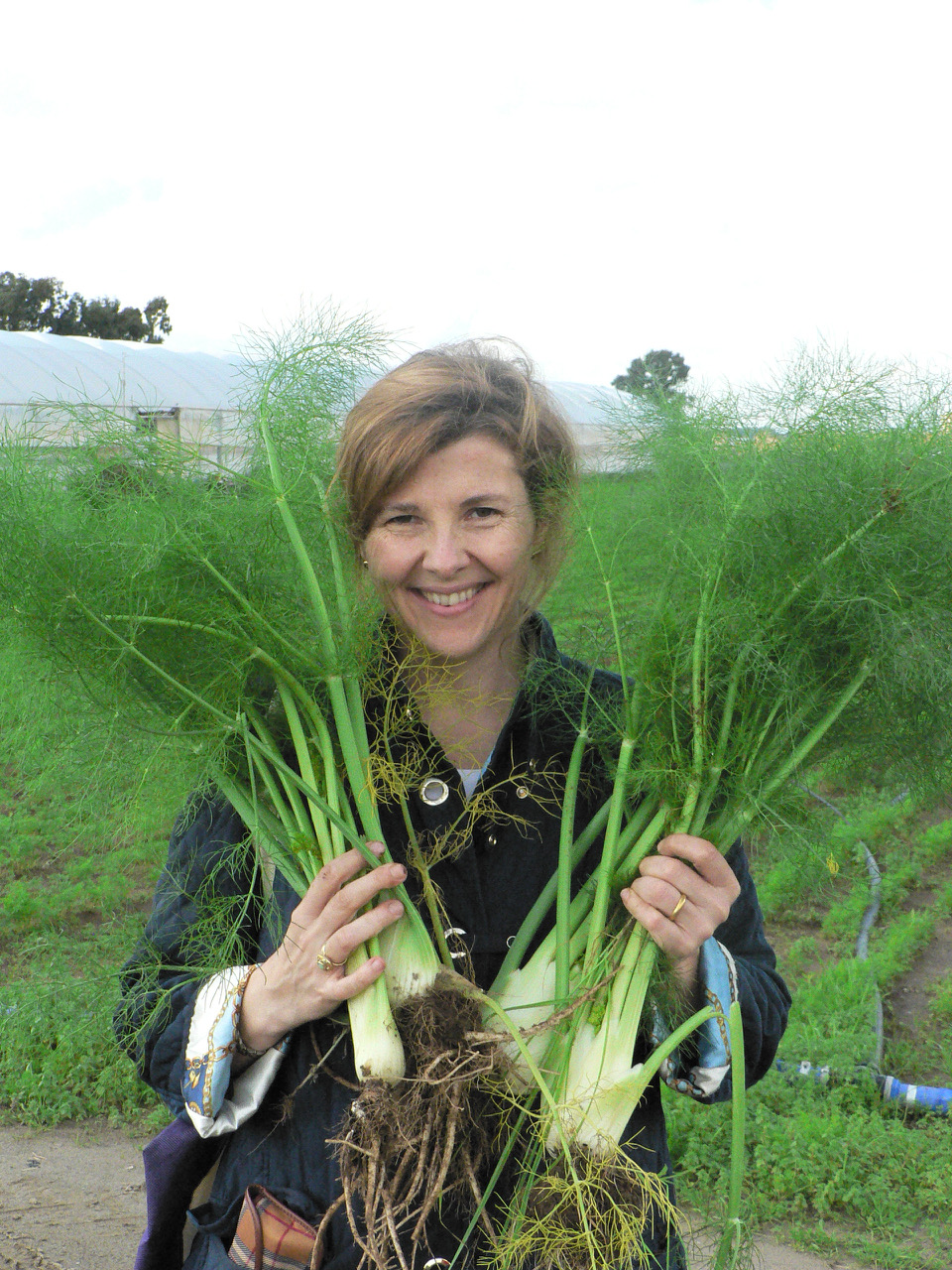
Meet Marjorie
Insider’s Italy is an experienced family business that draws on my family’s four generations of life in Italy. I personally plan your travels. It is my great joy to share with you my family’s hundred-year-plus archive of Italian delights, discoveries and special friends.